1. Purpose of the Visit
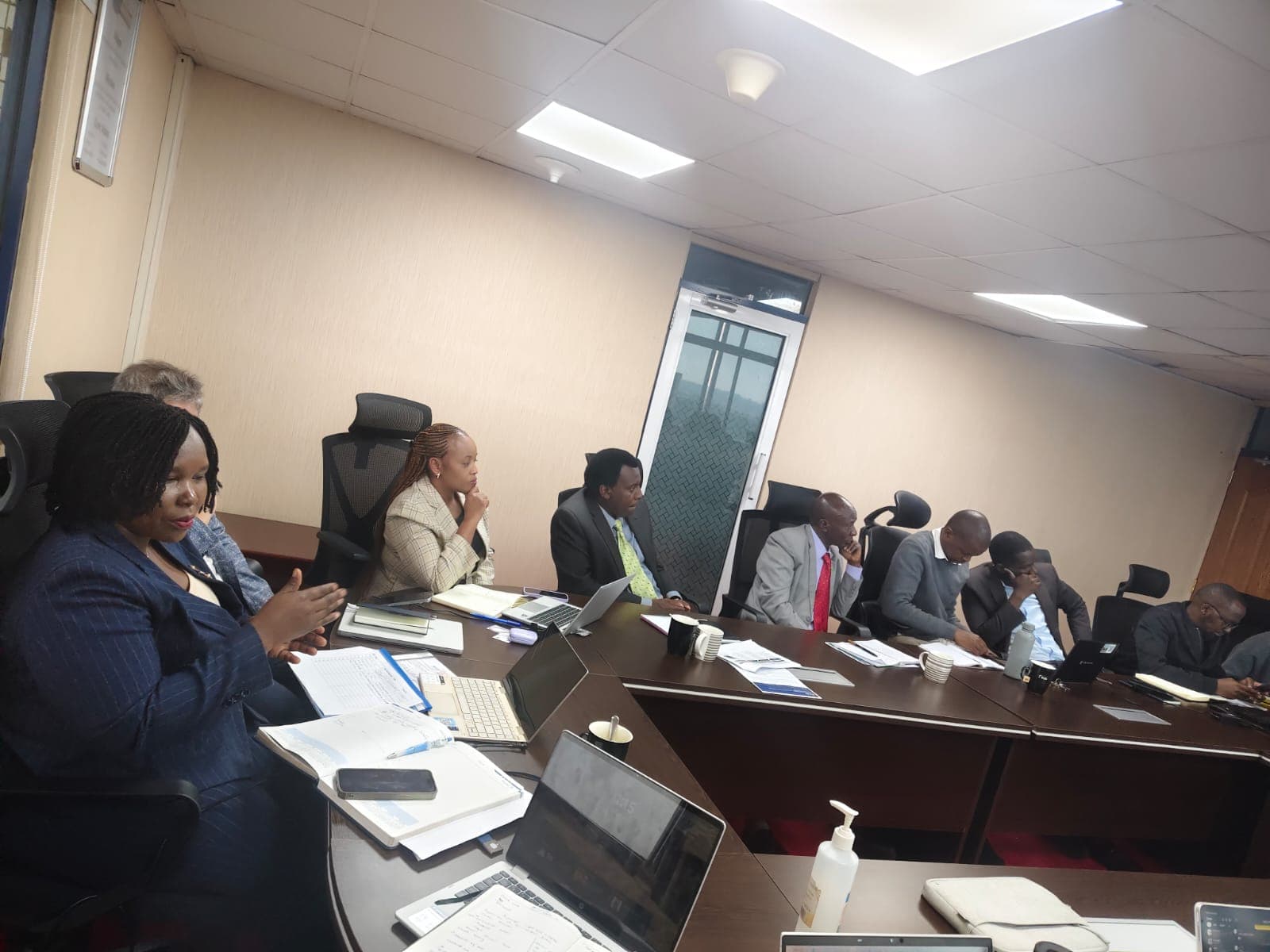
The main objective was to explore opportunities for collaboration in Kenya under the Korea-Africa Foundation's 2026 Global Accelerating Program. The session began with introductions from representatives of the National Environment Management Authority, the Department of Waste Management and Pollution Control, the Climate Change Directorate, and the Korean delegation for a session covering five Korean innovations with potential application in Kenya.
2. Presentation 1: Korean Battery Management System (Lead-Acid Batteries)
The first presentation focused on the Korean battery management system for lead-acid batteries. The batteries are cost-effective, reliable, and widely used in forklifts and heavy machinery. In the Kenyan market, they are also more affordable than competing alternatives, giving them a clear price advantage with limited competitive pressure. Extends the lifespan of local battery infrastructure through advanced battery management and State of Health diagnostic solutions combined with an automatic electrolyte replenishment system.
Battery Type Price (USD)
Portable battery $1,500
Standing / stationary battery $2,000
3. Presentation 2: Kijanify – Digital Carbon Credit Solution for Farmers
The second presentation introduced Kijanify, a digital platform designed for smallholder farmers. The solution addresses climate-related challenges by helping farmers participate in carbon credit markets. The application can operate offline and collects data on carbon emissions from coffee farms.
Pilot countries currently include Rwanda, Uganda, Ghana, and Ethiopia. The subscription fee for the platform is $35, and access is quick and user-friendly.
Key features and outcomes include:
• Data storage: Information is backed up to the cloud to prevent loss.
• Carbon calculation: The application customizes emission assessments by tracking all farming activities throughout the production lifecycle. This enables farmers to identify which practices contribute most to emissions and develop strategies to reduce them.
• Market access: Kenya is classified as a low-risk country, requiring only farm records for approval in the European Union market.
• Carbon credit distribution: Credits can be shared among farmers or allocated to NGOs, depending on project agreements.
• Expansion potential: Participants suggested adding more crops to the platform to broaden the carbon credit scope.
• Capacity building: The system also provides training and knowledge transfer to farmers, adding significant value beyond the digital tool itself.
4. Presentation 3: Rainbird GEO – AI-Powered Early Warning System
The third presentation showcased Rainbird GEO, a climate technology platform that combines geospatial information with artificial intelligence to provide early warning systems. The platform has potential applications for farmers, aviation zones, and disaster management in Kenya, particularly in relation to floods and landslides.
The platform provides information on heavy rainfall, rainfall intensity, and other extreme weather events. A key gap identified during the discussion was that rural communities often do not receive warnings in time. To address this, the team proposed partnering with Safaricom to disseminate alerts through SMS.
The system currently offers a resolution of 100 km × 100 km, but with AI enhancement, it can narrow this down to 10 km, and satellite data is used to further improve both resolution and accuracy.
5. Presentation 4: Solar Panel Recycling and circular economy
The fourth presentation focused on recycling end-of-life solar panels to recover valuable materials such as copper, silver and silicon. Those recovered materials are refined to industry grade and sold back into manufacturing, turning waste into revenue The proposed business model involves working with collection networks that gather solar panel waste and establishing sorting systems in collaboration with local partners.
The project aims to recycle 1 ton of solar panel waste and positions Kenya as a potential hub for solar panel recycling across Africa. It was noted that collaboration with ministries is essential to provide incentives that encourage communities to surrender their solar panel waste, thereby ensuring a steady supply of raw materials.
6. Presentation 5: Green Hydrogen Production via Acid-Based Electrolysis (ABEL)
The final presentation focused on producing green hydrogen through acid-based electrolysis. The technology replaces the conventional use of sulfuric acid and caustic soda and offers a more sustainable and cost-effective alternative.
Key highlights include:
• Cost efficiency: The overall production cost is lower when considering operational savings.
• Ammonia recovery: The process enables the recovery of ammonia as a byproduct.
• Wastewater treatment: Effluent from mining sites can be treated to a level safe for discharge into drainage systems.
• Industrial symbiosis: It was recommended that Acid-Based link with industrial parks to create integrated, mutually beneficial waste-to-resource systems.
7. Conclusion
The meeting provided useful insights into innovative Korean technologies and business models that have strong potential for application in Kenya. The key areas for collaboration include battery management, digital agriculture, early warning systems, e-waste recycling, and green hydrogen production. Going forward, the ministry will explore practical steps for integrating these solutions into national environmental and climate resilience strategies.
This article was prepared by Rebecca Atieno Ombogo(CCD - Intern) based on notes from the delegation meeting. Views and figures are drawn from the session as presented by the visiting delegation and do not constitute an official Ministry position.