
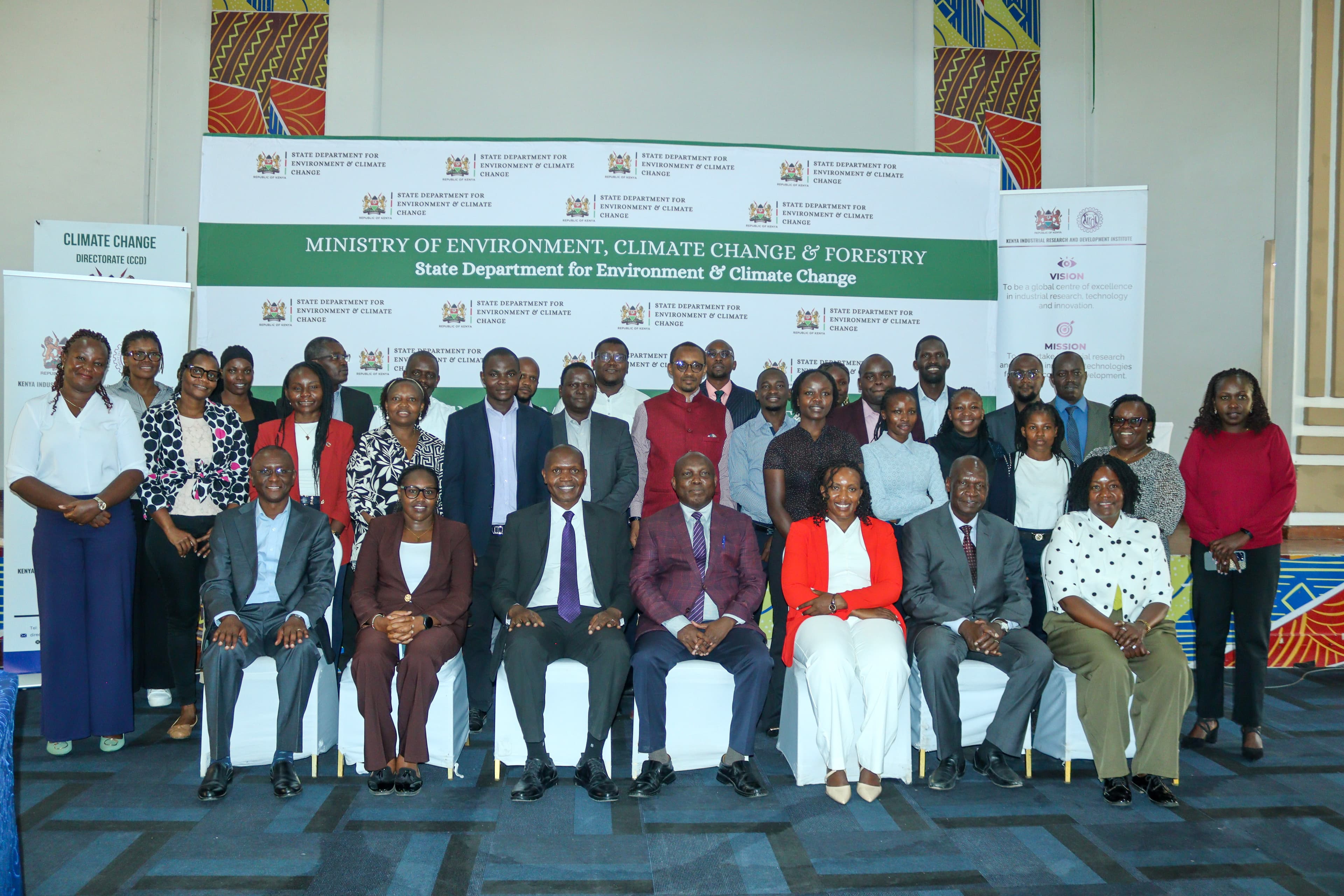
The Climate Change Directorate, in collaboration with the Kenya Industrial Research and Development Institute (KIRDI), convened a workshop on 22 October 2026 at the Kenya Institute of Curriculum Development (KICD) in Nairobi to raise awareness of the Climate Technology Centre and Network (CTCN) and its role in supporting climate action in Kenya. Held under the theme “Empowering Kenya’s Climate Action: Leveraging the CTCN for Technology Transfer and Innovation,” the workshop sought to enhance understanding of CTCN services, identify opportunities for technical assistance and technology transfer, and strengthen collaboration among national stakeholders.
During the opening session, a representative of KIRDI delivered remarks on behalf of the Director General, highlighting the importance of technology transfer, innovation and partnerships in advancing Kenya’s climate action and low-emission development objectives. The remarks underscored KIRDI’s role in identifying national climate technology needs, promoting climate-smart agricultural technologies, improving resource efficiency and supporting enterprises to build resilience to climate change. The discussions emphasised the need to identify practical, locally relevant technologies that respond to Kenya’s climate challenges while creating opportunities for innovation and sustainable development.
A representative of the Climate Change Directorate also delivered remarks on behalf of the Director, emphasising the central role of climate technology in implementing climate action. The remarks highlighted the importance of mobilising climate finance and harnessing Kenya’s young, educated and innovative population to develop and implement solutions to climate change. Participants further discussed the importance of connecting technological innovation with appropriate financing, partnerships and capacity building to support the implementation of climate strategies and strengthen the country’s resilience to climate impacts.
The CTCN supports countries in identifying and accessing climate technologies through technical assistance, knowledge sharing, capacity building and collaboration with its network of institutions and experts. As a signatory to the United Nations Framework Convention on Climate Change (UNFCCC), Kenya continues to advance climate action through efforts relating to climate finance, technology development and transfer, and capacity building. In this process, the National Designated Entity (NDE) serves as the national focal point for engagement with the CTCN, coordinating technology assistance requests, convening relevant stakeholders, encouraging institutions to participate in the network and linking national priorities with available technical support and expertise.
The workshop also highlighted the importance of coordination among national institutions in advancing climate technology initiatives. Discussions touched on the role of the National Environment Management Authority (NEMA) in the carbon project approval process, including the receipt and review of project applications and concept notes against established requirements. Such institutional processes form part of the broader framework for supporting climate action and ensuring that initiatives are assessed in accordance with applicable national procedures.
A practical example discussed during the workshop was the CTCN-supported initiative on catalysing low-cost green technologies for sustainable water service delivery through the Water Sector Trust Fund (WSTF). The initiative addressed challenges associated with inadequate and unsafe water supplies, unsustainable water resources and the impacts of climate change. Proposed interventions included the construction of water pans and sand dams, with solar-powered water pumping identified as an important technology option. The case study illustrated how appropriate technologies can support more sustainable water service delivery and strengthen resilience in communities affected by water scarcity and climate variability. The discussion also highlighted the importance of infrastructure planning, including the consideration of water pans with a capacity of at least 30,000 cubic metres to improve water storage.
The workshop provided an opportunity to strengthen stakeholders’ understanding of the CTCN and the support available to Kenya through its NDE. By promoting collaboration between government institutions, research organisations, industry and other stakeholders, the engagement highlighted the importance of aligning climate technology needs with technical expertise, innovation and financing. Strengthening these connections will be essential in translating Kenya’s climate priorities into practical solutions that advance low-emission development and climate resilience.